
Leafy Green – Food sharing Service
TIMELINE: Mar 2025 - Jun 2025
To solve problem with food waste, and to fight increasing food prices, leafy green provides a solution for uni students to share surplus food with peers. To ensure the process is convenient and safe, we designed a physical store and a digital platform through applying UI/UX design principles. Physical store provides a unified space for students to exchange food with others and the digital platform facilitate the sharing experience.
I led the design of the Voiceflow chatbot, implemented the Airtable API and email automation, and kept the team coordinated and aligned.
ROLE
Technical Lead
TEAM
Shange Ke
Yiming Li
Contributions:
In Part 2 of the project, I led the technical work and helped the team align on the design process.
Design Process:
The progress the project through a iterative process. From ideation, feedback, execution and then feedback again.
Involving users throughout surfaced problems early, kept the workflow efficient and ultimately produced a product that end users were happy with.
Details
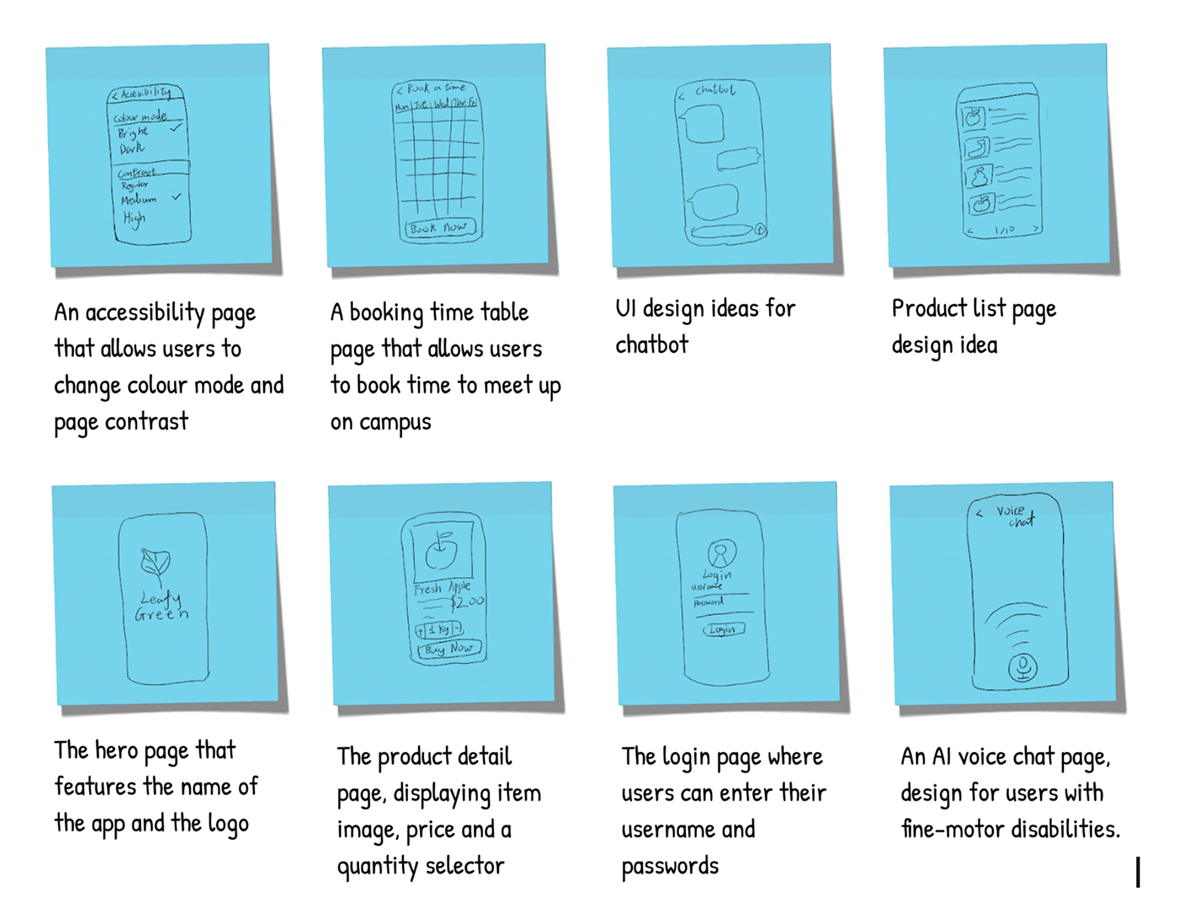
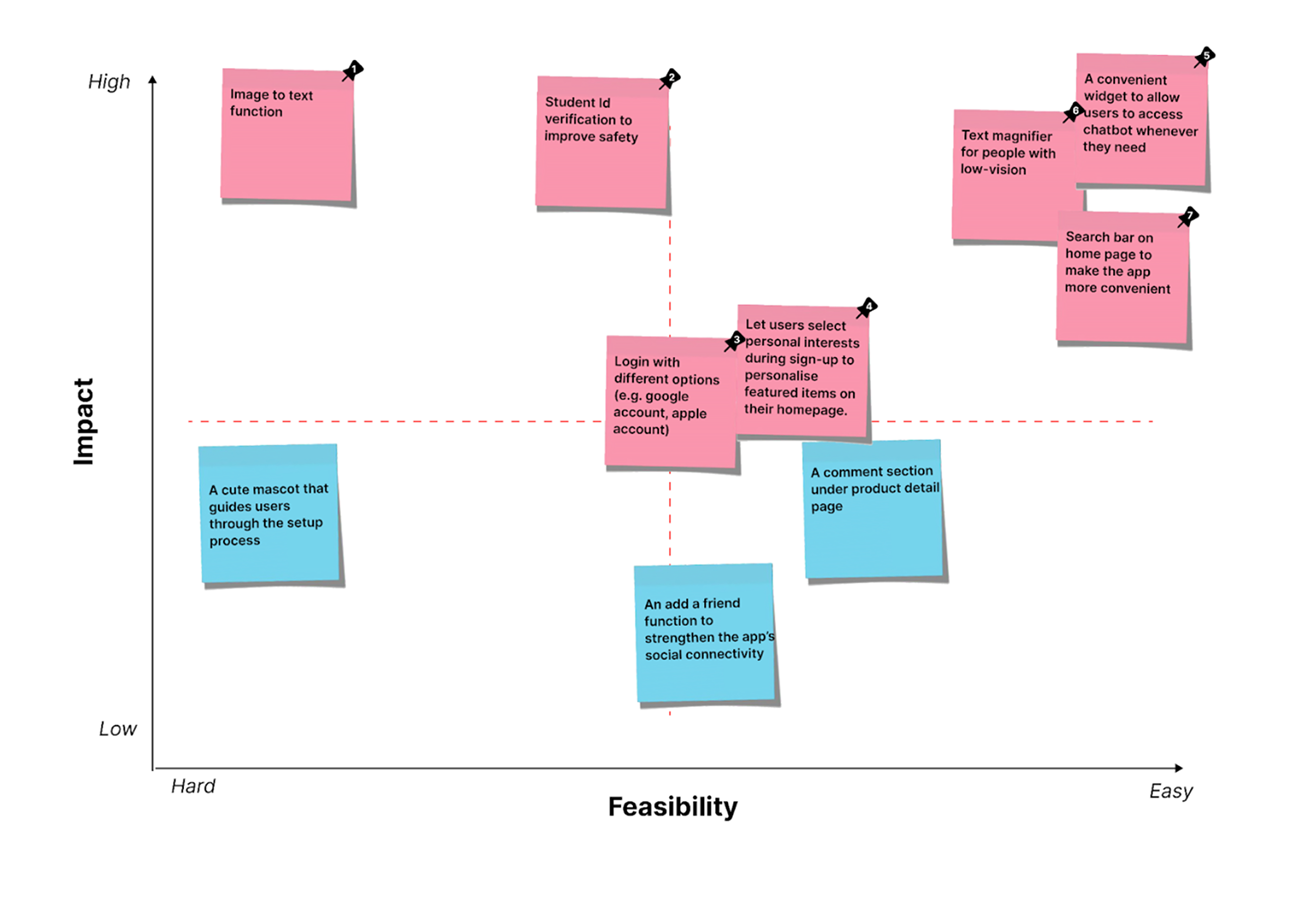
Ideation - 10 + 10 Sketches
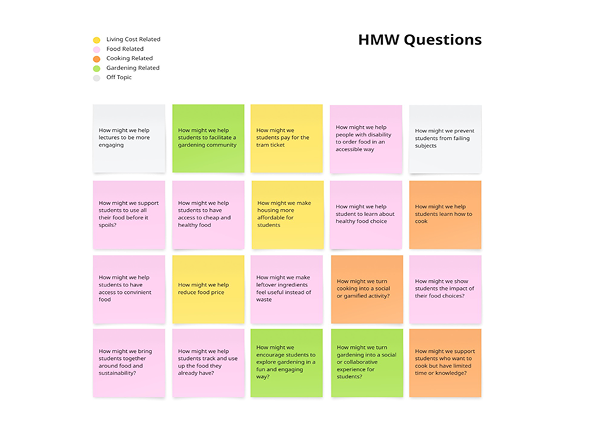
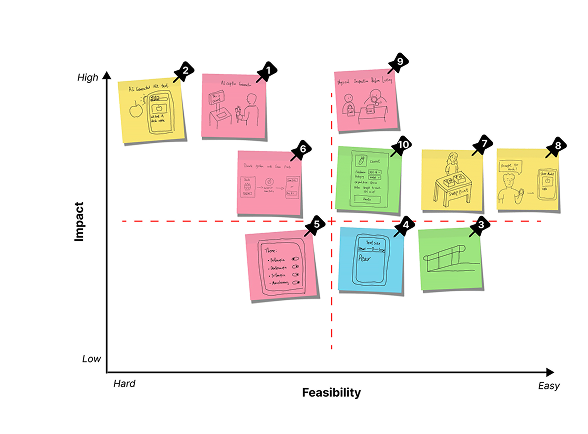
We used HMW to question and uncover potential problems, use Crazy 8 to visualize the problems, and finally evaluate the priorities of the problems to list the most prioritized and effective solutions.
Learning:
Through this process, we accurately understand the pain points of students in this topic and propose effective solutions. In particular, we consider how to make it easier for people with disabilities to participate.
Storyboarding - Low to Mid Fidelity
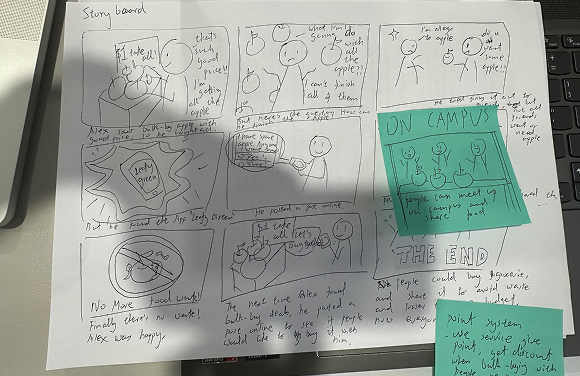
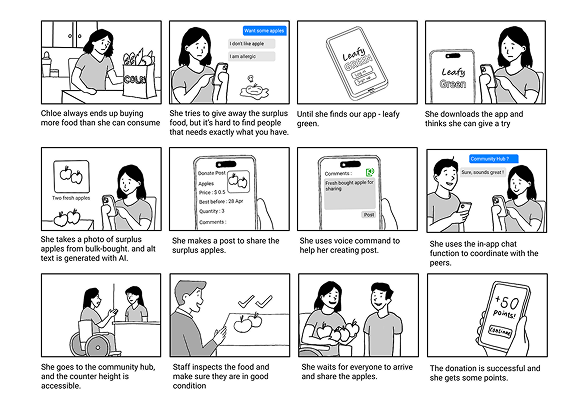
To communicate our ideas to stakeholders, we first drew a low-fidelity storyboard and then presented the workflow to peer for feedback. Participants quickly and accurately raised concerns about hygiene and made many suggestions, effectively advancing our project to a more feasible solution. Then we move on to mid-fidelity projects.
Learning:
The solutions that seem feasible in the conception are actually not the case after drawing, especially the lack of intermediate processes.
Desktop Walkthrough
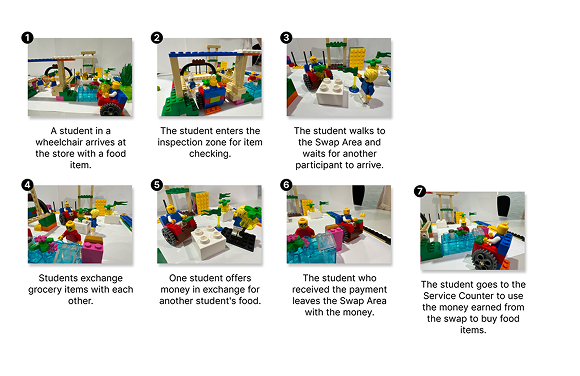
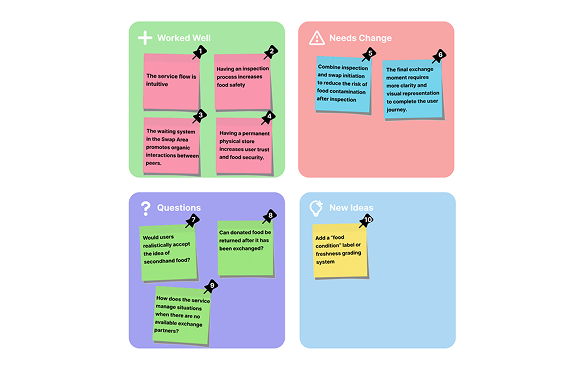
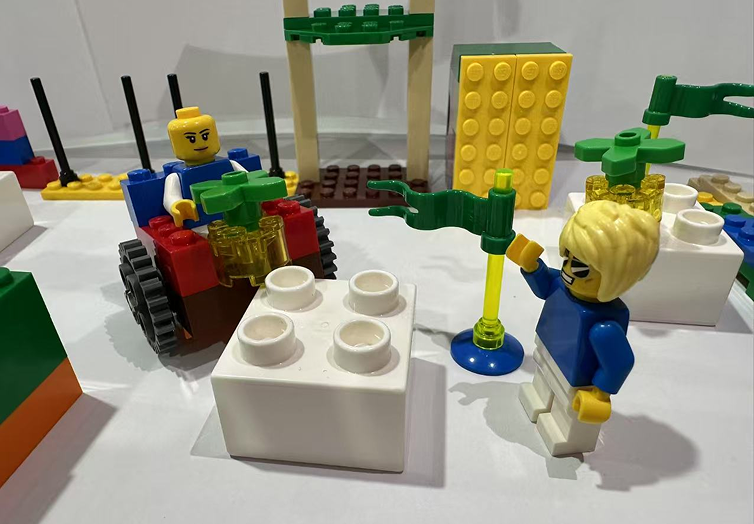
In order to more fully demonstrate the interactions in a physical store, especially to simulate the experience of people with disabilities, we use Lego for demonstration.
Learning:
With this visualisation, we can gain a more comprehensive understanding of the interaction of this process and it provides an opportunity to test out the inclusiveness of the project.
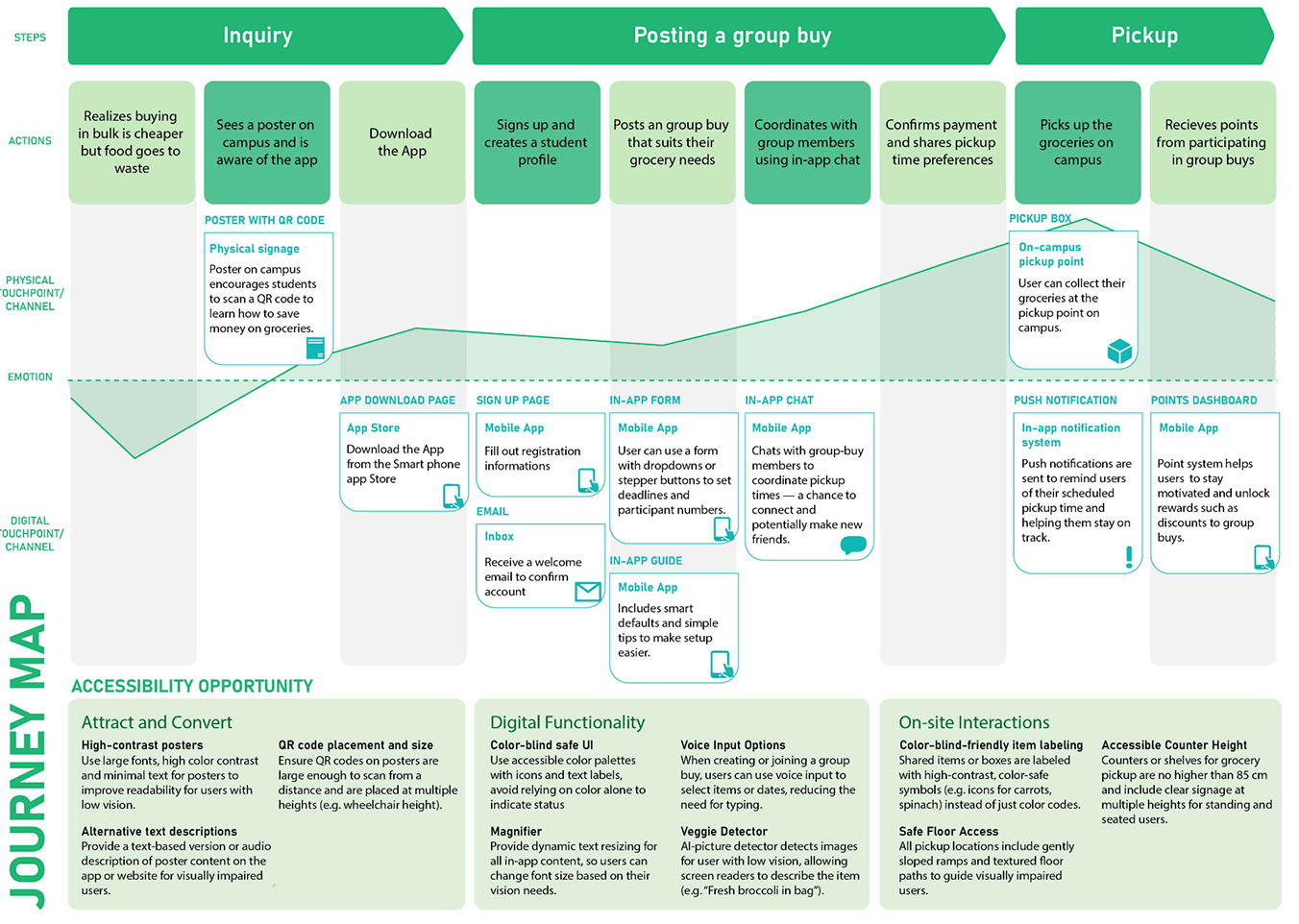
Journey Map
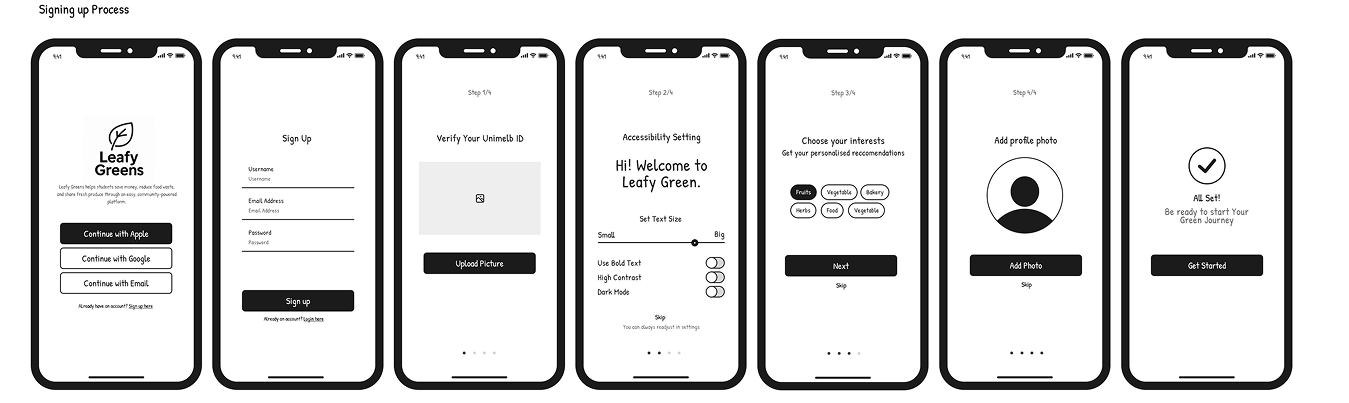
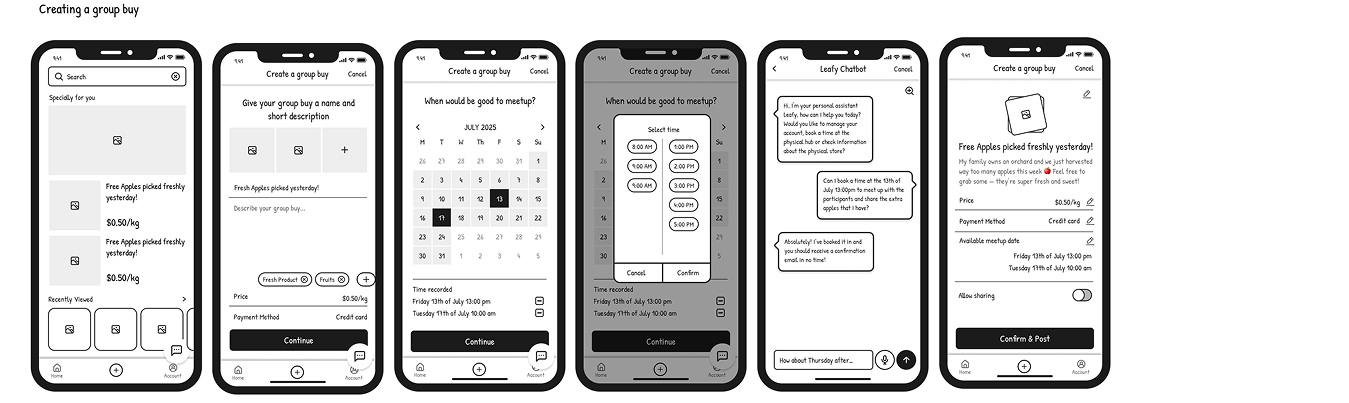
Wireframe Design
Sign Up
Creating Group Buy
Sharing Food
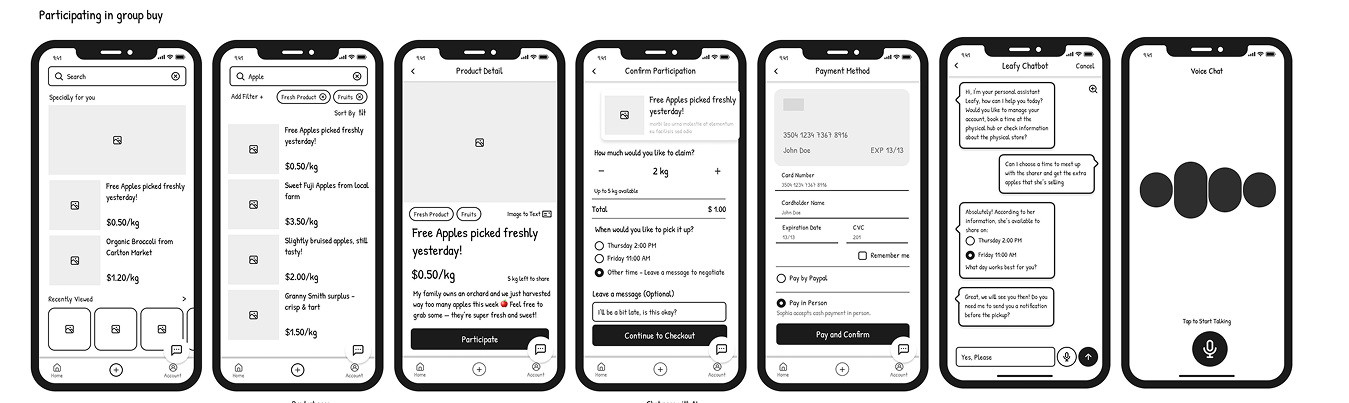
Chatbot - Voiceflow
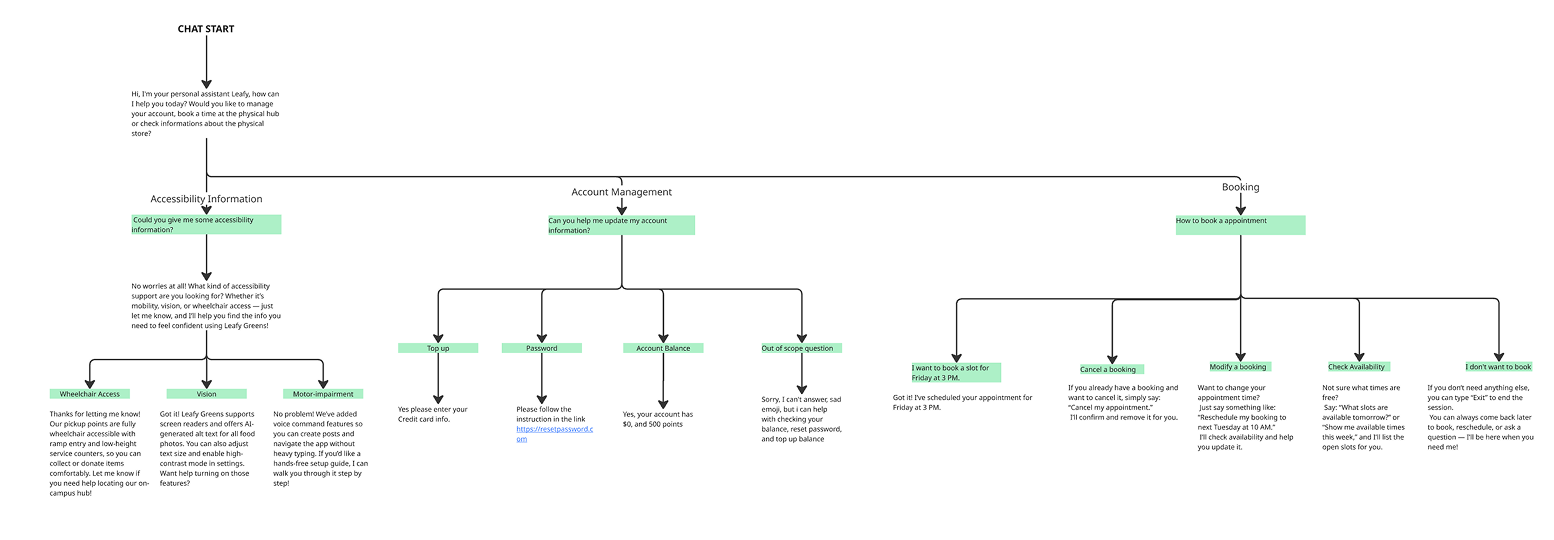
Iteration 1: Script & Feedback Testing
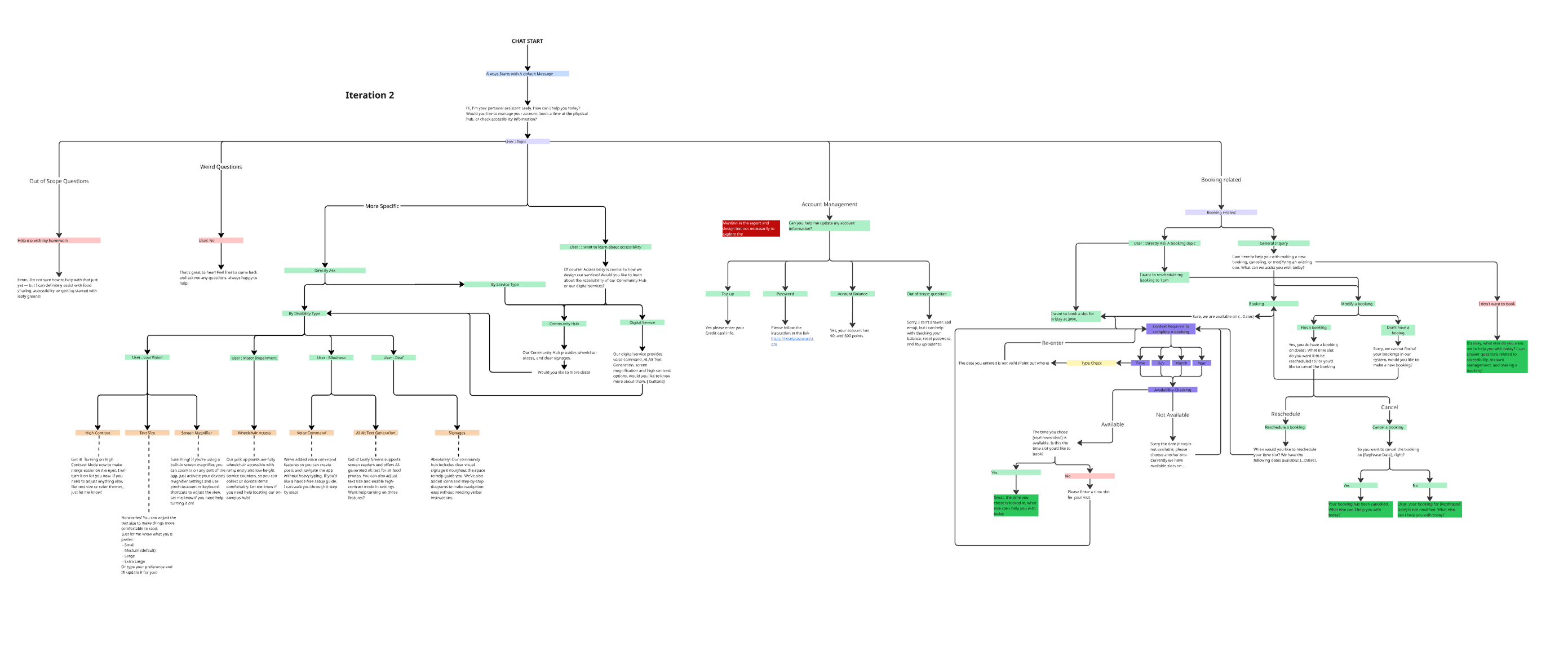
Iteration 2: Voiceflow + Airtable Integration
Challenges
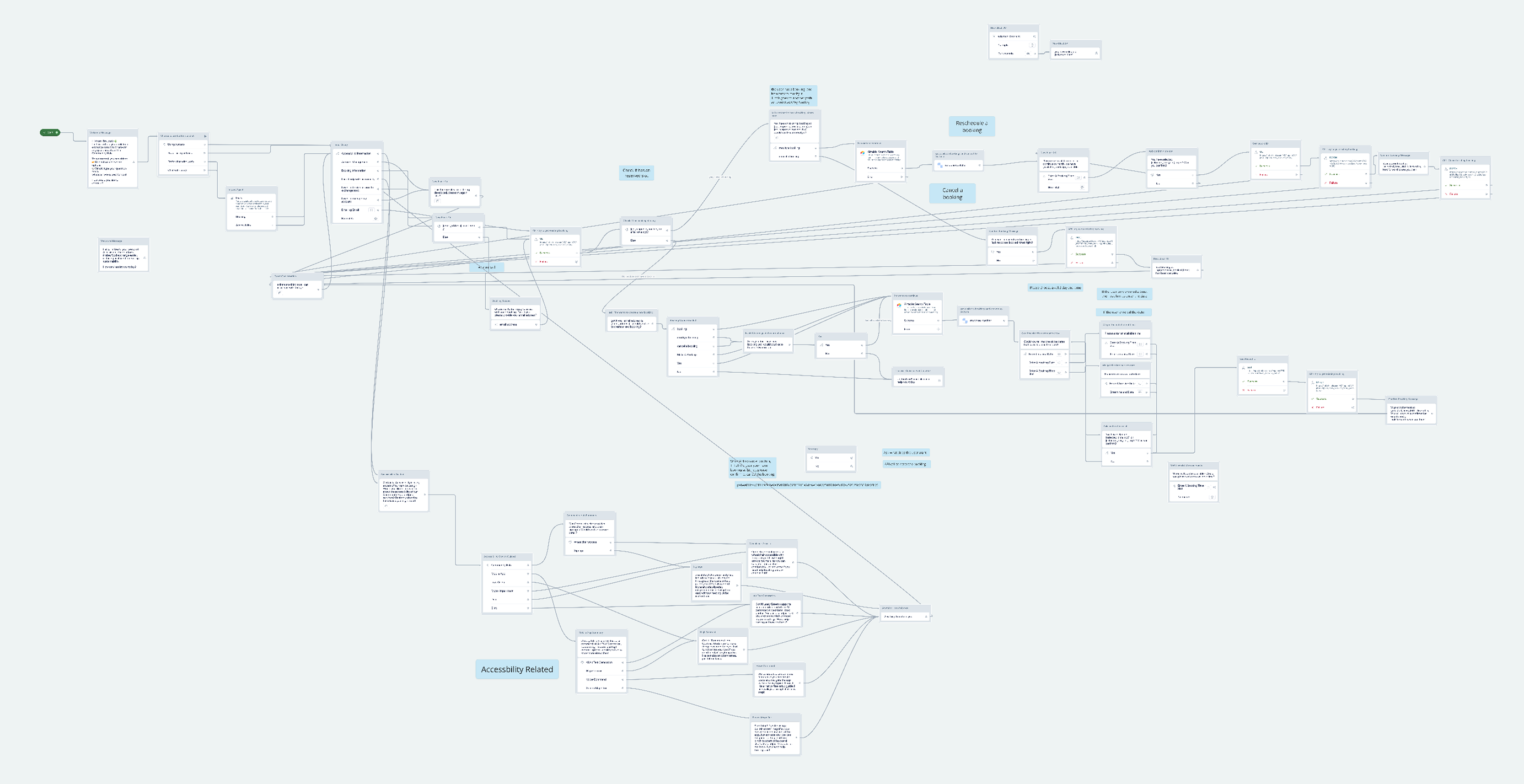
It was a great challenge to use Voiceflow, a new software that lacks essential supports from its documentation and community. I relied on solid programming foundations and intuition to implement the system with very limited support. Watching youtube videos was not enough, namely the dynamic button feature, that is when fetching data from the airtable api call, it should generate a list of button of dates that use can press, which wasn’t implemented due to the time limit. Even so, it pushed me to learn a new tool fast.
Then, it was difficult to make a trade-off between functionality, feasibility, and conversational experience. To implement the booking feature, it was necessary to control the information entered by the user while overcoming the unpredictability of the AI agent and adapting to user preferences. Therefore, we used prompts to ensure that the system could understand the data entered by the user well and adjust according to the status.
Write to me
Questions, ideas or collaborations? Write to me.


